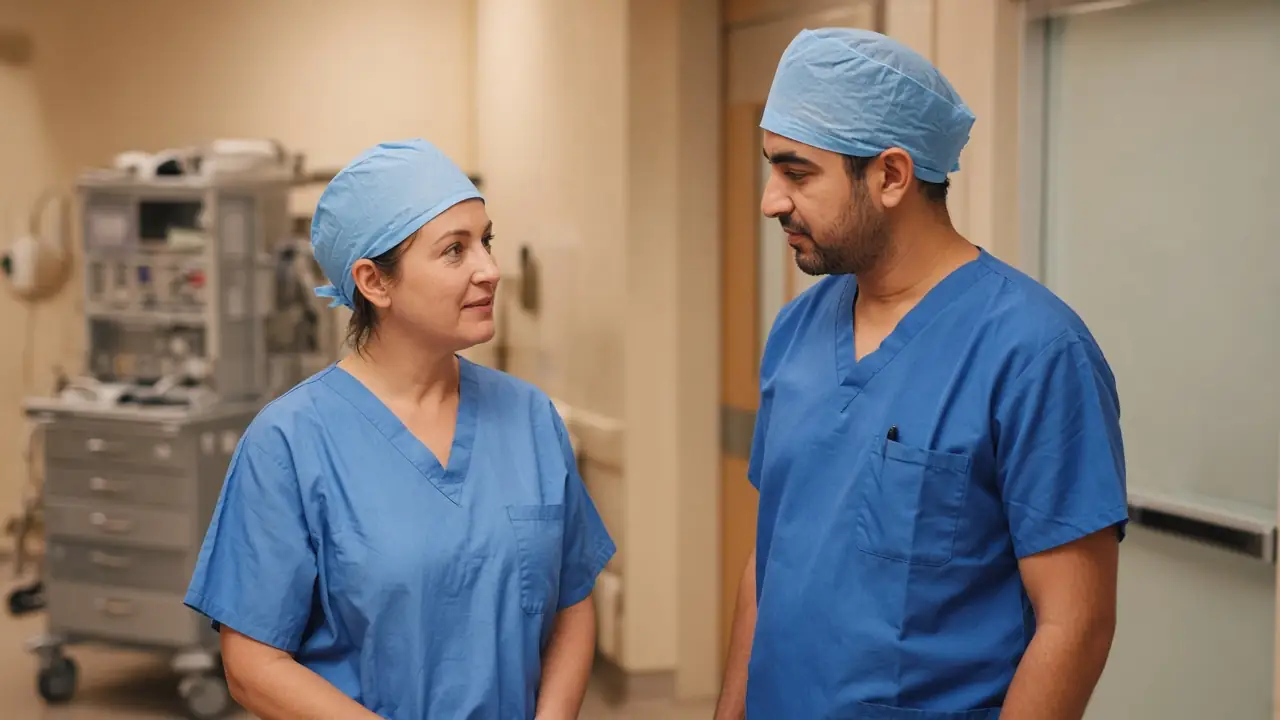
The posting says CVOR and the rate is a few dollars over the main core. A tech in the lounge tells you hearts are where the money is, and that the call is not that bad. You bid. Your first month you are second scrub on a leg vein while someone else runs the chest. Your third month they put you on the call roster. You still have to look at the card before you know which cannulation suture that surgeon wants, and the phone does not care.
Cardiovascular operating room work can be a great job if you want one service, a small team, and cases long enough to get genuinely good at them. It is a rough job if you wanted a higher rate and a predictable afternoon. Those are different offers. The posting often writes them as if they were one sentence.
What a CVOR posting is actually hiring for
Cardiac on a job board covers a wide set of rooms. One hospital means coronary artery bypass grafts and valve replacements on the pump, five days a week, plus the dissection that comes in at midnight. Another hospital means pacemakers, a vein once a month, and a surgeon who does the real open-heart work at the medical center across town. Both postings can say CVOR.
Coronary artery bypass creates a new route for blood to get past a blocked coronary artery. In the usual open operation, the breastbone is divided. For most patients, a heart-lung machine pumps the blood while the surgeon sews. Off-pump bypass is done on a beating heart, without that machine. If you have never stood in the room and the posting is nothing but abbreviations, MedlinePlus explains the operation in plain language. You do not need it in order to scrub. You need it in order to know which job you are applying for.
Ask the manager to name last month’s cases. You want to hear CABG, valves, and whatever aortic work they actually do. You also want to hear what they do not do. A lot of transcatheter valve work lives in a hybrid room with a different crew. If the posting is selling TAVR experience, ask who scrubs, who circulates, and whether that person is even in the CVOR cost center.
The Association of Surgical Technologists has been plain about who belongs in these rooms. In its teaching material on off-pump bypass, AST says cardiac procedures are generally scrubbed by technologists who have been trained for open-heart surgery. You will feel that standard in the interview even when nobody says the letters AST out loud.
The people in the room
A pump case is crowded on purpose. Surgeon, first assistant, circulating nurse, anesthesia, perfusionist, and at least one scrub. When the bypass needs a leg vein or a radial artery, there is often a second scrub so one person can stay with the chest while the conduit is taken. MedlinePlus describes that split: one part of the team on the chest, another taking vein from the leg. The second-scrub role is the job, for a while. It is how you learn the sequence without being the only person who can wreck it.
You are not the perfusionist. You are not the assistant unless you hold that credential and the hospital has privileged you to assist. The scrub runs the sterile field. Instruments, sutures, cannulas, wires, counts, and the timing of what gets passed next. The longer version of how scrub, circulator, and assistant sit next to each other is in who does what in the room. Hearts add perfusion. They own the pump. You own the sterile hardware that connects the patient to it. The jobs meet at cannulation. They are not interchangeable, and a short-staffed night is a bad time to discover that somebody hoped you would cover both.
What the scrub is doing on a pump case
The room is usually one of the biggest in the department, because the people and the equipment need the space. Setup starts earlier than a general room. The preference card is long. Small items have to live where your hand already knows to go when the pace changes. AST’s article on aortic valve replacement makes the practical point: check the card before the patient rolls in, open the pile so the back table stays usable, and assume the plan can change after the incision.
The shape of a straightforward CABG, from the scrub’s side, is a sequence. Skin, the saw, the retractor, harvest of the internal mammary artery if that surgeon uses it, the pericardium, cannulation, a quieter stretch while the grafts are sewn, then a faster stretch when the patient comes off bypass and the chest has to be dry enough to close. One team is often on the leg or the arm during part of that. You are either that team or you are feeding the chest. Know which assignment you have before the patient is on the table. Finding out at incision is how setups get duplicated and counts get messy.
A few habits are easy to miss if your whole career has been gallbladders. AST’s cardiac articles tell technologists to learn the saline temperatures that specific team uses around the cross-clamp and during rewarming. Cold versus warm is part of the plan at that hospital, not a personal preference you invent on the day. The same guidance says to leave the cannulas and the cannulation suture available after the pump is off. People go back on bypass. The moment you need that stitch is a bad moment to be fishing in a bucket you already broke down.
Counts get heavier here. More laps, more sutures, sternal wires, and a closure the surgeon wants to finish once they have decided the field is acceptable. Your hospital’s count policy is the policy. Speak before the wires go in if something does not match. A room that treats “we will look later” as teamwork is a room that will eventually explain a retained item to someone who did not find that funny.
The case that does not stay on the card
The call team exists for the case that leaves the card. A graft that is not right. Bleeding after the chest is already closed. A dissection rolling up from the emergency department. A patient who was stable on the table and is not stable ten minutes later.
You will not run those on week two. You should still know, before you are the only tech in the building, where the pump packs live, where the sternal saw lives, and who you call when the surgeon is still in the car and the night charge nurse came from the main core. Orientation that never walks you through an emergency setup stopped before the job started.
Watch one emergency setup while you are still extra, even if you only hold the step stool. Where is the IABP equipment if they ask for it. Who opens the pump tubing. Which suture is the one they want for a crash return to bypass. Write it down that night. You will not remember it from a story someone told you in the lounge.
Off-pump is a different case, not a shorter one
Off-pump bypass keeps the heart beating. A stabilizer holds a small area still enough to sew. There is no calm hour on the pump. The field moves. Conversion to cardiopulmonary bypass is the backup, which means the pump is in the room, or immediately available, even when everyone hopes to leave it alone.
AST’s off-pump guidance is written for a team that does this work, not for a tech who was pulled from a joint room at 10 a.m. The technologist is expected to stay ahead of the sequence, to understand why the rhythm on the monitor matters to the next move, and to know a role if the patient has to be resuscitated. A perfusionist is on standby. If a manager says “we do some off-pump” and cannot tell you who scrubs those days, or how a conversion is opened, you are hearing a slogan.
Smaller-incision and robotic versions exist. A short incision does not make the scrub easier. It changes the setup, the instruments, and which patients even qualify. Ask whether you will scrub those cases, watch them, or only hear about them after they are done. Robot time that never reaches you is not experience you can put on a resume.
Call is the schedule
Elective hearts are a weekday pattern at plenty of hospitals. The beeper is for everything else. Some weeks the beeper is a paperweight. Some weeks Friday’s last case ends at 7 p.m. and Saturday’s phone rings at 2 a.m. People leave this service over the second week, then tell their friends the hourly rate was fine.
Ask whether you take call from home or stay in the hospital. Ask how many minutes you have to arrive. Ask who is backup if you are already scrubbed when the second case posts. Ask what the day after call looks like. A department that brings you back for a full elective slate after a night on the pump has told you how it treats sleep. Believe the schedule, not the sentence about work-life balance.
Then separate the lifestyle from the dollars. Call, nights, and callback are where a modest base rate becomes a real check, and where a flashy base rate stays ordinary because callback is paid in short minimums. Do that math with the policy in front of you. Hearts pay more is not a policy.
Why they hesitate to hire new grads
A lot of CVOR units want a year or two of scrubbing before they will train you on the pump. That stings when clinicals went well and every main-core posting also wants experience.
The hesitation is about sequence. A general room can absorb a slow setup. A pump case has more moving parts, a longer stretch where small delays stack up, and emergencies that do not pause while someone finds the right wire. Units that do hire new graduates usually give them a long orientation and keep them off the beeper until a preceptor will sign that they are safe without a chaperone.
If you are trying to get there from the main core, build the skills this room actually uses. Counts you trust when you are tired. Fine suture you can manage without a tangle. A back table that is still organized at hour four. Vascular cases, thoracotomies, or long general cases, which teach you to stay present when the room is quiet and to move when it is not. Your first 90 days in any operating room are the rehearsal. An open chest is a poor place to have your first week as the only scrub.
Ask for the length of orientation in weeks. Ask who precepts, and whether that person is also the first name they pull when the core is short-staffed. A preceptor who is never beside you is a signature on a checklist. Ask what independent means in that department, and whether the call schedule starts before the word is honest.
What to have in your hands before you bid
You do not need to have scrubbed a bypass to be worth training. You do need a straight answer to a few questions a CVOR educator will ask.
- Can you describe your count routine when a relief person comes in mid-case?
- Have you scrubbed cases that ran past four hours without the table falling apart?
- Have you worked with fine vascular suture, clips, and a field where you cannot keep reaching across?
- Can you name a time you stopped a close because something was wrong, and what you said?
If those answers are still thin, stay in a busy core for a while and be obvious about wanting hearts. Pick up the second-scrub vein when they offer it. Watch a full pump case on your day off once, with permission, and write the sequence the same night. That is a more convincing application than a cover letter that says you are passionate about cardiac surgery.
The pay is often the call, not a secret hearts rate
Some hospitals pay a real CVOR differential. Some pay the same base as the main core and let the call do the advertising. A few pay the differential only on days you are assigned a heart room, then float you to joints and take it back. Get that sentence into the offer.
Use the same questions you would use for any money conversation. Is the differential permanent, or a temporary add-on that expires? Does it follow you if your shift changes? Is call mandatory in the first year? What did the last person in this line take home in a quiet quarter, not in the quarter the city had three dissections? Negotiating the rate, the differential, and a sign-on goes better after you understand the beeper. A sign-on tied to brutal call is how people feel stuck at month eight, paying the bonus back in sleep.
There is no honest national hearts differential to quote. Anyone who gives you one number for the whole country is guessing. Your number is the one next to the call rules in the offer letter.
How to tell a training program from a warm body slot
Volume matters more than the tour. A CVOR that does a handful of pump cases a month cannot teach you, however kind the surgeon is. You will spend the other days in other services, which may be what you wanted, and you will hit a call night under-practiced, which is not what you wanted.
Listen to how the current techs describe backup. A stable unit can tell you who comes in when two emergencies land together. A worn-out unit says they figure it out and glances at the traveler. You can learn from travelers. You cannot build a program out of them if the staff line is empty.
Ask what happens if the senior surgeon leaves. Heart programs are often built on one or two people. When they retire or move, the line you bid can shrink to veins and generators, and the differential can shrink with it. That is not a reason to refuse the job. It is a reason to know whether the skill you are about to spend two years learning will still have a room.
Years of only hearts make you valuable in another CVOR and awkward in a surgery center that wants a knee and a 3 p.m. finish. If you are not sure you want a specialty yet, read how to choose a specialty without boxing yourself in before you take a call-heavy line. Specializing can be exactly right. It should be a decision you can describe, not something the differential made for you.
The work is physical in a specific way. The Bureau of Labor Statistics notes that surgical technologists have one of the highest rates of injuries and illnesses of all occupations, including slips, falls, and overexertion, and that the job keeps people on their feet for long stretches. A chest case is one of those stretches, often with a heavy instrument pan and a table you cannot walk away from. Shoes, a real meal, and a team that will let you take a break after hour five are part of staying in the job. Treat them as conditions of the offer.
Questions worth asking in the interview
- Which cases did this room do last month, by name?
- Pump, off-pump, robotic, hybrid, or a mix? Who scrubs each one?
- Will I start as second scrub, first scrub, or both?
- How many weeks of orientation, with whom, and when does call start?
- Home call or in-house? How many minutes to arrive? What is the callback minimum?
- What does the day after call look like on the schedule?
- Is there a differential, and does it apply when I am pulled out of CVOR?
- How many pump cases a week will I actually scrub during orientation, and after it?
- Who is backup if two emergencies hit at once?
- What happened to the last person who held this line?
The last question sounds nosy. Ask it. A unit that trained someone and kept them will tell you a plain story. A unit that went through three techs will talk about fit.
Whether you will like the work
This job fits if you like one team, a short list of operations you can become excellent at, and cases where paying attention for hours is the skill. The mammary harvest feels purposeful when you know what you are setting up for. It feels endless if you wanted eight turnovers and a different surgeon every hour.
It fits poorly if you wanted to be done when the elective board is done. The beeper is part of the schedule. Compare that with the other jobs people describe as special. Labor and delivery gets sold as the quieter night, and that work has its own nights. Hearts has a different kind. Neither one is a disguised surgery-center Tuesday.
Take the line if they will teach you, the pump volume is real, and the call rules are written down. Walk away if the higher rate is the only sentence anyone can finish. You can learn this work. You should not have to guess what the work is while you are already on the roster.
Sources
- MedlinePlus Medical Encyclopedia: Heart bypass surgery
- MedlinePlus: Coronary artery bypass surgery
- Association of Surgical Technologists: Off-pump Coronary Artery Bypass Grafting
- Association of Surgical Technologists, The Surgical Technologist: Aortic Valve Replacement
- U.S. Bureau of Labor Statistics, Occupational Outlook Handbook: Surgical Assistants and Technologists
Leave a Reply